
CartiHeal Agili-C · Patient selection
Who may be suitable for CartiHeal?
A defined lesion is only the start. Cartilage, subchondral bone, alignment, ligaments, meniscus, osteoarthritis and rehabilitation capacity all shape selection.
 Reviewed byProfessor Paul Lee MBBch, FRCS (Tr & Orth), PhDCartilage and joint preservation expertise
Quick answer
CartiHeal may be considered for selected knee cartilage or osteochondral lesions. Trial criteria provide useful context, but suitability remains an imaging-led, whole-knee surgical decision rather than an online promise.
Verified across three networks
Trusted by patients on Doctify, Google and Top Doctors
Osteochondral selection
CartiHeal treats a cartilage-and-bone site, not knee pain in general
CartiHeal is a biphasic implant placed into a prepared cylindrical site spanning articular cartilage and subchondral bone. Suitability therefore begins with a defined cartilage or osteochondral lesion rather than symptoms alone.
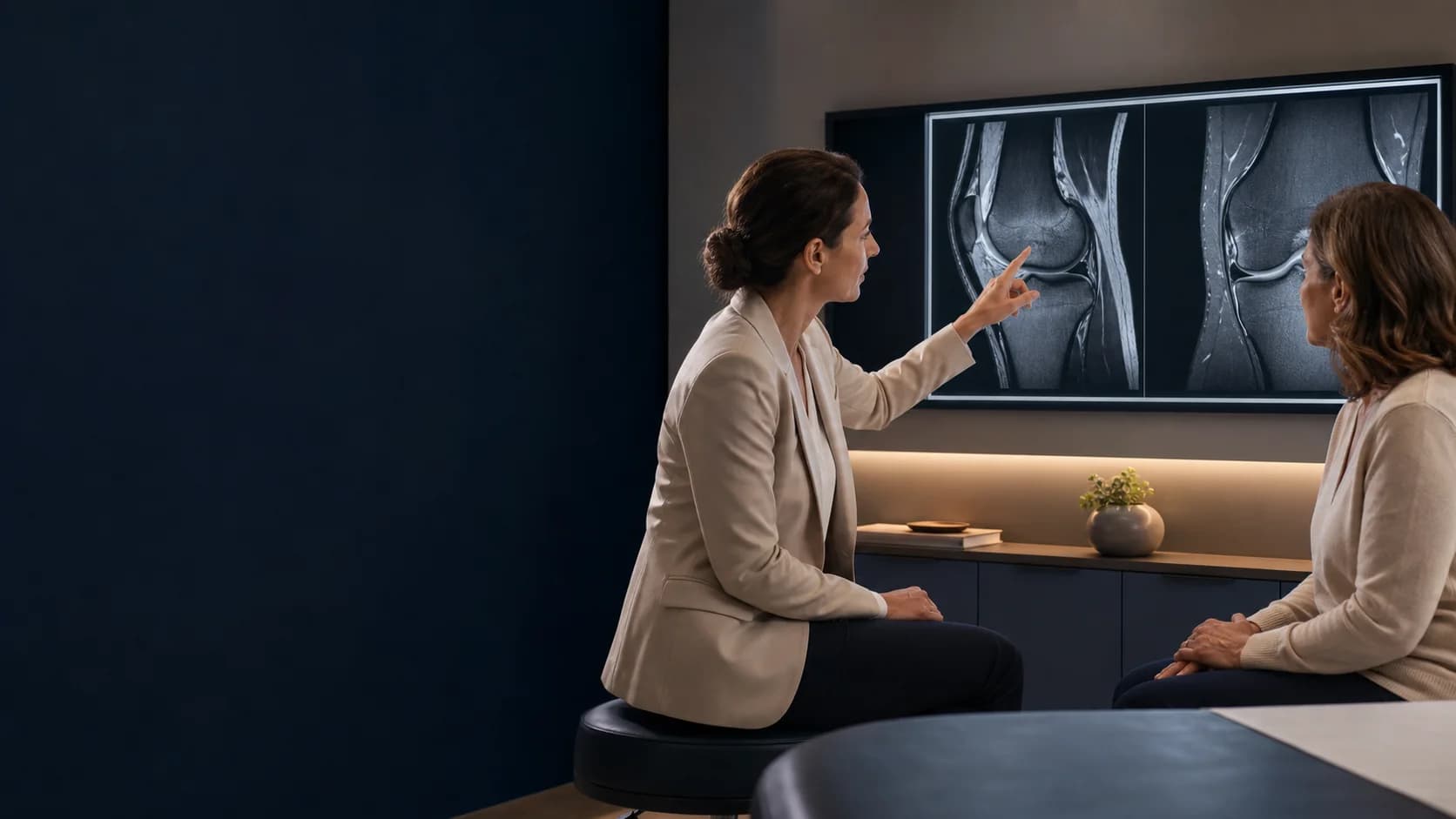
MRI and weight-bearing imaging help establish lesion size, depth, containment, bone change and the condition of the rest of the joint. Examination adds alignment, stability, meniscus function and the patient's real activity goal.
- Defined focal cartilage or osteochondral lesion
- Surrounding cartilage and bone able to support the plan
- Alignment and ligament stability considered
- A realistic ability to complete protected rehabilitation
Whole-knee assessment
A focal lesion sits inside a larger system
Imaging
MRI defines cartilage, bone, containment and the rest of the joint.
Alignment
Load distribution can support or undermine focal repair.
Stability
Ligaments and meniscus must be part of the plan.
Rehabilitation
Protected loading and progressive strength need to be realistic.
Pivotal-trial context
The studied population at a glance
21–75
Age range studied
≤3
Lesions treated
1–7 cm²
Total treated area
KL 0–3
OA grades included
Research population
The pivotal trial gives context—not an automatic indication
The randomised trial enrolled adults aged 21 to 75 with up to three lesions, total treated area from 1 to 7 cm², ICRS grade 3A or higher and Kellgren–Lawrence grade 0 to 3.
Those criteria describe the studied population. They do not mean every person inside the age or size range is suitable, and they should not be confused with current UK product instructions, governance or an individual surgical recommendation.
Reasons another route may fit
The whole knee can outweigh the focal lesion
Diffuse end-stage joint disease, uncorrected malalignment, instability, meniscus deficiency, infection risk or inability to follow rehabilitation can change the balance. Another cartilage restoration operation, osteotomy or joint replacement may be more credible.
CartiHeal is now available at London Cartilage Clinic, but availability does not make every focal lesion suitable. Assessment defines the knee and compares the implant with established repair, graft, alignment and replacement options before a plan is agreed.
Selection sequence
How suitability is narrowed down
- 1Define the lesionSize, depth, location, containment and underlying bone.
- 2Test the whole-knee mechanicsAlignment, stability, meniscus and surrounding cartilage.
- 3Compare credible operationsRepair, graft, osteotomy or replacement where proportionate.
- 4Agree the rehabilitation commitmentThe recovery plan is part of the surgical decision.
CartiHeal suitability questions
What lesion sizes were studied?
The pivotal trial included a total treated lesion area of 1 to 7 cm² and up to three lesions. Study entry criteria are not a blanket treatment indication.
Was osteoarthritis included?
The trial included Kellgren–Lawrence grades 0 to 3. The extent, distribution and mechanical consequences of osteoarthritis still need individual assessment.
Can CartiHeal treat diffuse bone-on-bone arthritis?
It is designed around selected cartilage and osteochondral lesions, not as a universal substitute for joint replacement in diffuse end-stage disease.
Can I book a CartiHeal assessment at LCC now?
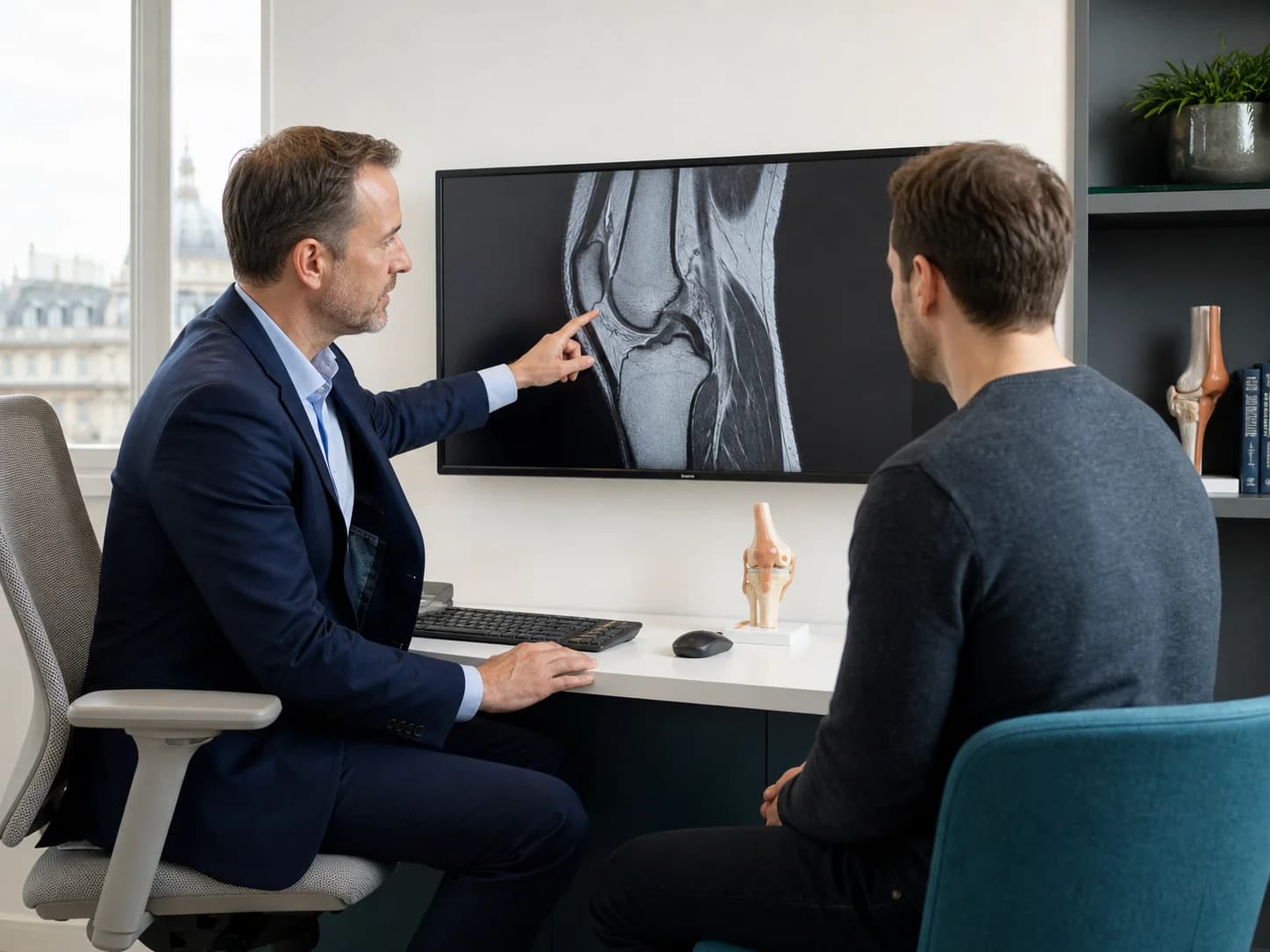
Yes. CartiHeal is now available for suitable patients. Book a consultation with Professor Lee so the lesion, underlying bone and whole knee can be assessed before surgery is considered.
Still have more specific concerns?
Free Discovery CallOptions that our doctors may discuss include NanoACi, ChondroFiller, Mytocel MSK, joint replacement, established conservative care or surgery, depending on examination and imaging.
Assess the cartilage lesion and the whole knee
Professor Lee can review your imaging, compare CartiHeal with other cartilage options and decide whether the lesion and whole knee make surgery reasonable.