
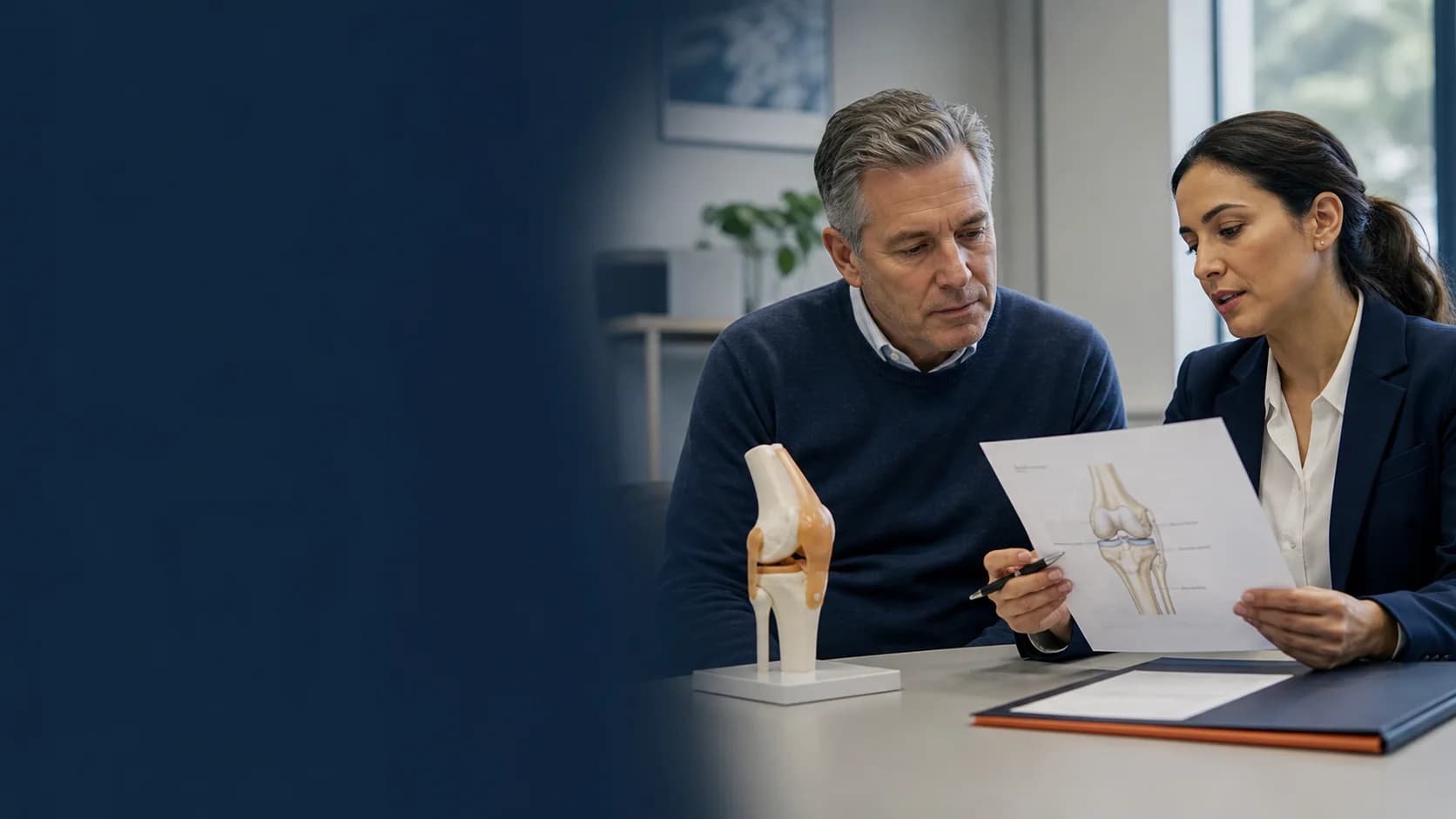
CartiHeal Agili-C · Informed choice
CartiHeal risks, failure and limitations
The five-year evidence is encouraging, but CartiHeal remains surgery with medical risks, rehabilitation demands, possible failure and the potential for further treatment.
 Reviewed byProfessor Paul Lee MBBch, FRCS (Tr & Orth), PhDCartilage and joint preservation expertise
Quick answer
Relevant risks include infection, clots, stiffness, persistent symptoms, incomplete healing or remodelling, treatment failure and further surgery. The trial reported lower failure than control, not zero failure.
Verified across three networks
Trusted by patients on Doctify, Google and Top Doctors
Surgical risk
CartiHeal is an operation, not a low-risk injection
General risks include infection, bleeding, blood clots, anaesthetic complications, stiffness, swelling, pain and wound problems. Individual health, medication and clot risk affect how these are managed.
The operation also creates one or more prepared osteochondral sites. Bone and cartilage must respond as intended while the implant remains appropriately positioned.
- Infection or wound complication
- Venous thromboembolism
- Stiffness, swelling or persistent pain
- Anaesthetic or medical complication
Informed consent
Four risk groups to discuss before surgery
Infection and wound risk
Any operation can involve infection, bleeding or wound problems.
Clot risk
Personal and procedural factors influence prevention and monitoring.
Stiffness or persistent pain
The knee may remain swollen, painful or slow to regain movement.
Medical and anaesthetic risk
Health, medication and previous reactions shape the individual plan.
Published 60-month results
Lower risk in the trial did not mean zero risk
Treatment failure (lower is better)
Replacement or osteotomy (lower is better)
Treatment-specific uncertainty
Failure is reduced in the trial, not eliminated
At five years, treatment failure was reported in 15.0% of the CartiHeal group and 35.7% of controls. That comparative advantage is important, but the implant group still included failures.
Possible problems include incomplete biological replacement, persistent symptoms, implant or surrounding-tissue problems, progression of osteoarthritis and inability to return to the desired function.
Further treatment
A successful decision includes a plan for what happens if it fails
Persistent symptoms may lead to further imaging, arthroscopy, revision cartilage surgery, alignment surgery or eventually joint replacement depending on the cause and state of the knee.
This is why alternatives, evidence, rehabilitation and the effect on future surgery should be discussed before proceeding—not only after a poor outcome.
If symptoms persist
Failure is investigated before the next operation is chosen
- 1Reassess symptomsPain, swelling, movement and function help define the problem.
- 2Review structureImaging can assess the treated site and the wider joint when indicated.
- 3Check mechanicsAlignment, stability, meniscus and loading remain relevant after surgery.
- 4Choose proportionate treatmentRehabilitation, revision repair, osteotomy or replacement may enter the discussion.
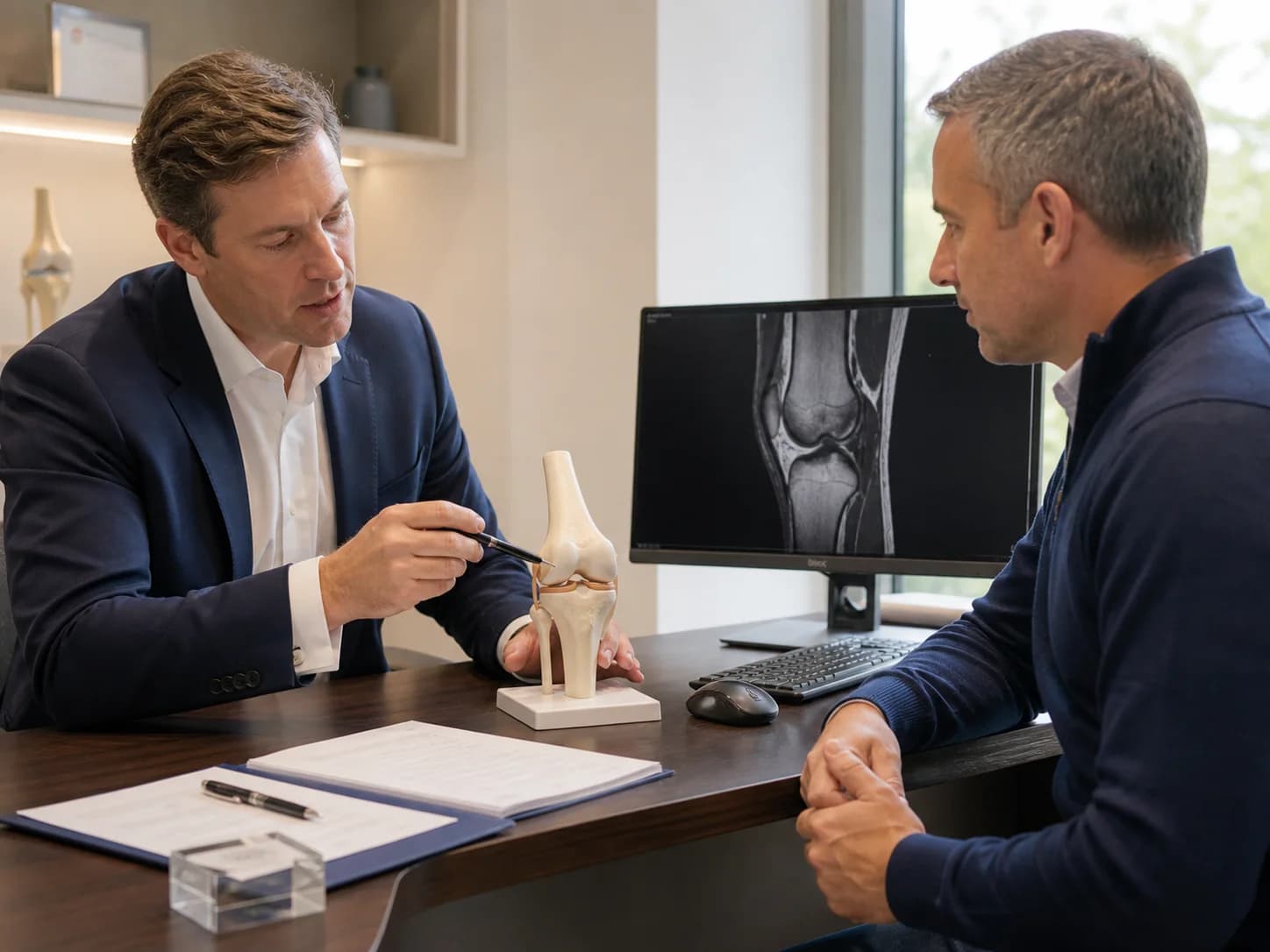
CartiHeal risk questions
Can CartiHeal fail?
Yes. The five-year trial reported a 15.0% treatment failure rate in the implant group. Better results than control do not eliminate individual failure.
Could I still need a knee replacement later?
Yes. CartiHeal does not guarantee that osteoarthritis will not progress or that future surgery will be avoided.
Does the implant remain permanently?
It is intended to be progressively resorbed and replaced by tissue. The biological process and clinical result vary.
Are all risks known from these advance pages?
No. Final consent would use current instructions for use, regulatory information and the patient’s individual medical and surgical risk profile.
Still have more specific concerns?
Free Discovery CallOptions that our doctors may discuss include NanoACi, ChondroFiller, Mytocel MSK, joint replacement, established conservative care or surgery, depending on examination and imaging.
Discuss benefits, risks and established alternatives
Professor Lee can assess the lesion, explain CartiHeal-specific risks and compare the implant with other cartilage treatment choices.