

Knee Cartilage
Demo Author One
Cartilage repair options for lasting joint health
A practical overview of cartilage repair, injection therapy, rehabilitation planning, and the clinical evidence that guides joint preservation care.

Who STACi is for
Who the surgical Structure, Seed, Soil and Signal cartilage pathway may suit—and how imaging separates it from NanoACi.
 Reviewed byProfessor Paul Lee MBBch, FRCS (Tr & Orth), PhDCartilage and joint preservation expertise
You may be a candidate for STACi if you have cartilage damage for which the joint also needs surgical preparation or mechanical correction before biology can be placed credibly. This may include defect preparation, alignment, stability or associated damage. Imaging—not the treatment name—confirms which structural work is required and whether joint preservation is realistic.
STACi is for cartilage damage that cannot be separated from the mechanics around it. A non-arthroscopic pathway may be sensible when the joint is structurally suitable; STACi becomes the clearer lane when surgery is needed to prepare the defect, restore useful stability, correct relevant loading or deal with associated pathology before the biological repair is placed.
The other group STACi was designed for is people turned away from the older cartilage cell therapies. ACi and MACi are largely capped at defects up to around 4 cm² and confined mainly to the knee. Being told a defect was “too big” for those techniques does not mean regeneration is off the table — it is precisely the situation the three-dimensional STACi scaffold was built to take on.
Being turned down for the older ACi or MACi because a defect was “too big” does not mean STACi is out of reach — it is exactly what STACi was designed for. The only way to know is an imaging review.
No web page can tell you for certain whether STACi is right for you — that decision rests on your imaging. At consultation, Professor Lee reviews your scans to judge the size, depth and location of the damage, the health of the surrounding cartilage, and whether the joint is stable and well aligned enough to support regeneration. Where alignment or instability needs correcting, that can sometimes be done in the same operation.
If you would like a quick, no-obligation sense of whether it is worth an imaging review, our short self-assessment walks you through the same questions the team starts with — then routes you to a free discovery call. Take the STACi self-assessment.
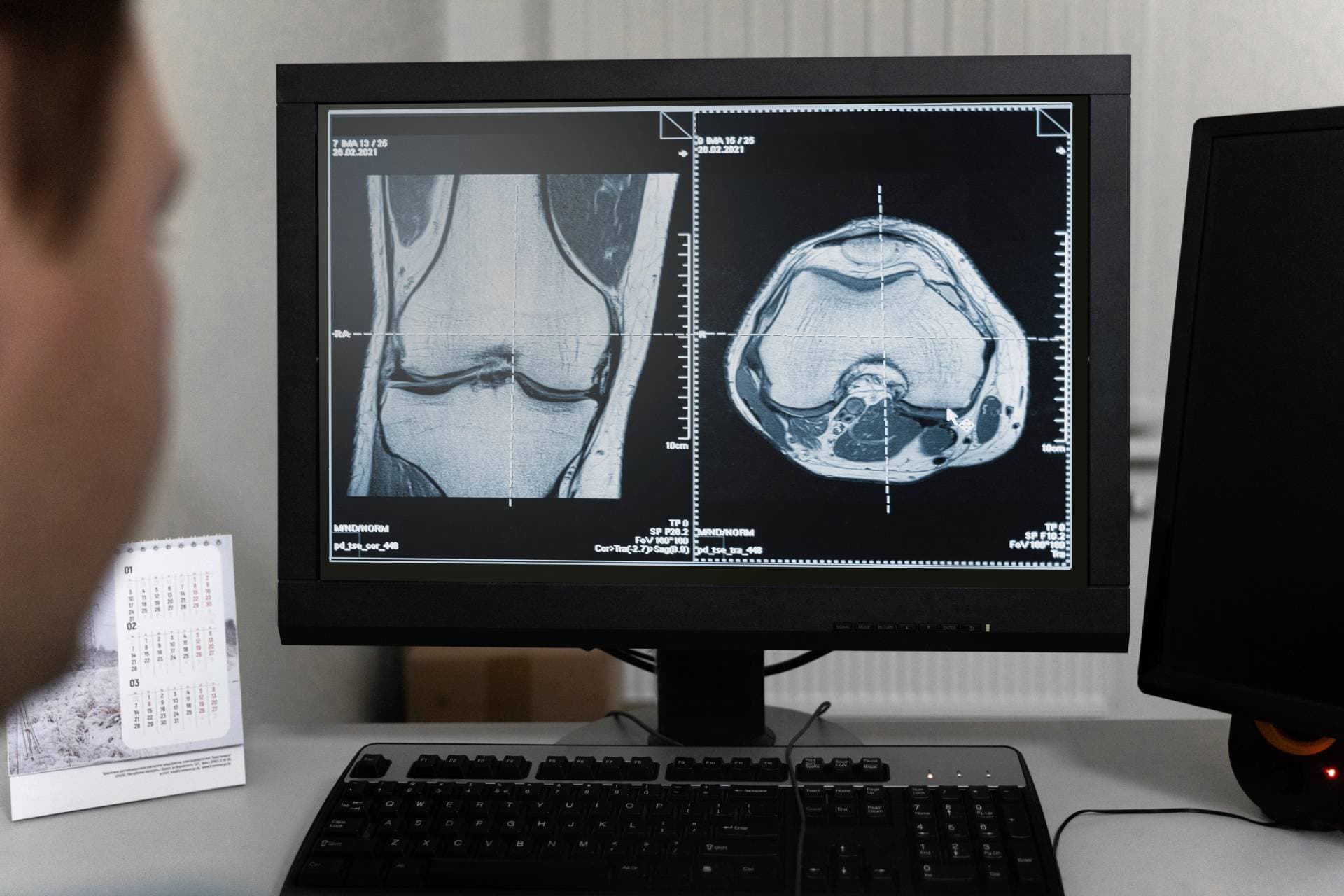

STACi is judged on the joint, not a birthday. It is most often chosen by people who are too young or too active to accept a joint replacement yet, but the deciding factors are the size and location of the cartilage damage and the health of the surrounding joint — which is what the imaging review assesses.
Focal cartilage damage with healthy surrounding tissue is ideal. Widespread, end-stage “bone-on-bone” arthritis across the whole joint is less suitable, though other LCC options may still help — that is what the consultation is for.
Relevant instability or malalignment is one reason STACi may be chosen over NanoACi. The first S is Structure: where indicated, the mechanical problem is corrected within the surgical plan before Seed, Soil and Signal are applied. Not every STACi case needs an osteotomy or ligament procedure; imaging determines the structural work required.
Yes. STACi asks for a staged rehabilitation over 9–12 months, because loading regenerating tissue too soon is the enemy of new cartilage. A willingness to protect the joint through the early months is part of being a good candidate. See the STACi recovery timeline.
Start with the free self-assessment or a discovery call, then book a consultation so Professor Lee can review your scans. Suitability is confirmed on imaging, not on symptoms alone.
Still have more specific concerns?
Free Discovery CallA free discovery call is the easiest first step; a consultation gets your imaging reviewed by the surgeon who would perform the procedure.
London Cartilage Clinic
Clinical updates, cartilage treatment guidance, and recovery-focused articles from our specialist team.
A practical overview of cartilage repair, injection therapy, rehabilitation planning, and the clinical evidence that guides joint preservation care.
A practical overview of cartilage repair, injection therapy, rehabilitation planning, and the clinical evidence that guides joint preservation care.
A practical overview of cartilage repair, injection therapy, rehabilitation planning, and the clinical evidence that guides joint preservation care.