

Knee Cartilage
Demo Author One
Cartilage repair options for lasting joint health
A practical overview of cartilage repair, injection therapy, rehabilitation planning, and the clinical evidence that guides joint preservation care.
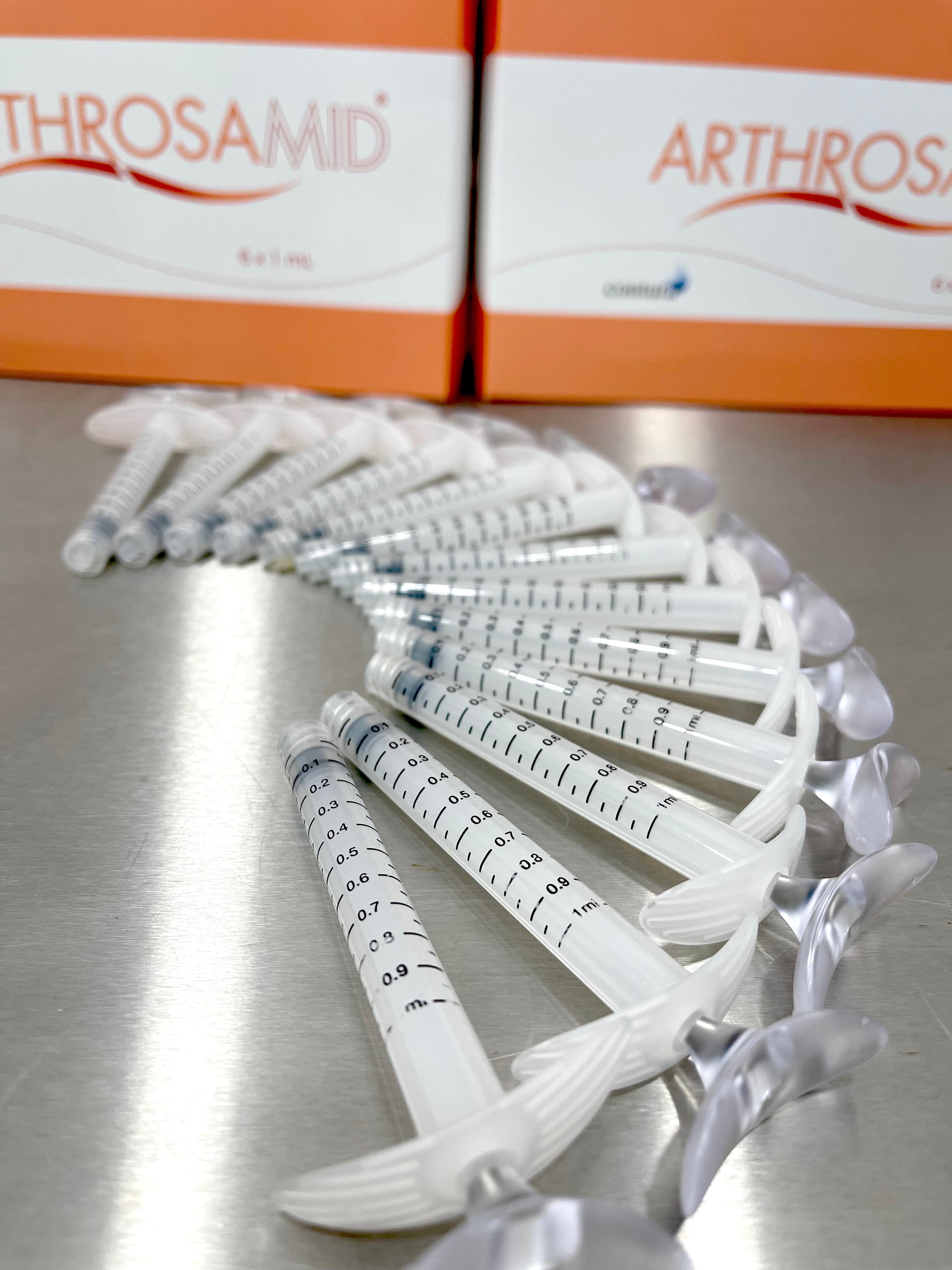
Regenerate, cushion, or both
Arthrosamid is intended for symptom management; NanoACi has a cartilage-repair aim. This guide compares evidence, suitability and when either, both or surgical assessment may be appropriate.
 Reviewed byProfessor Paul Lee MBBch, FRCS (Tr & Orth), PhDCartilage and joint preservation expertise
Arthrosamid is a hydrogel injected into the joint to cushion it and ease pain. It does not regenerate cartilage. Its published observational cohort reports group outcomes through 24 months, without a randomised control group, and treatment starts at £3,000. NanoACi has a separate cartilage-repair aim. A combined plan needs a rationale for each component and direct evidence for that combination is limited.
Both are offered at London Cartilage Clinic and have different treatment aims. Assessment determines whether one option, a carefully justified combination or a surgical opinion is more appropriate.
| What to compare | Arthrosamid | NanoACi |
|---|---|---|
| What it does | A hydrogel injected into the joint to cushion it and ease pain | Delivers your own cells, a ChondroFiller scaffold and PRF to regenerate cartilage |
| Regenerates cartilage | No, it is intended for symptom management rather than rebuilding cartilage | Yes, that is its purpose |
| Works in a bone-on-bone joint | Stage alone cannot predict response; replacement assessment may be more appropriate | Suitability depends on imaging and the joint mechanics, not this label alone |
| What is injected | A non-absorbable hydrogel intended to remain in the knee joint | Your own cells, a collagen scaffold and PRF, all from your own body |
| How long it lasts | 24-month observational follow-up; not a duration guarantee | One session, with benefit reported to last at least three years |
| Sessions | One injection | One session |
| Cost | From £3,000 | £8,000, or £8,500 all-inclusive |
| Often used together | Only where it has its own indication and consent | Direct evidence for the combined pathway is limited |
Both are offered at London Cartilage Clinic; this is a genuine choice, and often a pairing, not a takedown of Arthrosamid.
Advanced wear should prompt a balanced discussion rather than an automatic pairing. NanoACi and Arthrosamid have different aims, but each component needs its own indication, evidence discussion and consent. Direct evidence for combining them is limited, and replacement assessment may be the sounder option.
Arthrosamid is a symptom-management option for appropriately selected adults with knee osteoarthritis. The published 24-month cohort reports group-level improvement and has no randomised control group. NanoACi answers a different question. Imaging, examination and realistic alternatives should decide the plan rather than a fixed choice or combination made in advance.


NanoACi and Arthrosamid do different jobs. Arthrosamid is a hydrogel injected into the joint to cushion it and ease pain; it does not regenerate cartilage and is intended for symptom management rather than rebuilding the surface. NanoACi has a separate cartilage-repair aim. Both are offered here, but the evidence and suitability for each need to be considered separately.
They may be discussed together only where each component has a separate clinical rationale. Arthrosamid is intended for symptomatic adult knee osteoarthritis; NanoACi has a different treatment aim. Direct evidence for the combined pathway is limited, so it is not a standard answer based on a “bone-on-bone” label alone.
That phrase does not decide the treatment. Imaging, alignment, stability, function and your goals need review, and replacement assessment may be more appropriate. An injection or combined pathway should be recommended only where each part has a defensible rationale. See Am I a candidate for NanoACi?
No. Arthrosamid is a soft, water-based hydrogel that stays in the joint to cushion it and ease pain. It does not rebuild cartilage, and neither advanced wear nor the 24-month cohort can predict an individual response or duration. NanoACi has a different treatment aim; a combined plan is not automatic and has limited direct evidence.
Arthrosamid is from £3,000. NanoACi is £8,000, or £8,500 all-inclusive, which covers an MRI scan, your consultation, the single NanoACi session and a follow-up. Where the two are used together for advanced wear, Professor Lee will set out the combined plan and cost at consultation. See the NanoACi cost page.
Still have more specific concerns?
Free Discovery CallOptions that our doctors may discuss include NanoACi, ChondroFiller, Mytocel MSK, joint replacement, established conservative care or surgery, depending on examination and imaging.
Because the options have different aims and evidence limits, the next step is a review of your imaging and clinical picture. Start with a free discovery call, or book an MRI and consultation with Professor Lee.
London Cartilage Clinic
Clinical updates, cartilage treatment guidance, and recovery-focused articles from our specialist team.
A practical overview of cartilage repair, injection therapy, rehabilitation planning, and the clinical evidence that guides joint preservation care.
A practical overview of cartilage repair, injection therapy, rehabilitation planning, and the clinical evidence that guides joint preservation care.
A practical overview of cartilage repair, injection therapy, rehabilitation planning, and the clinical evidence that guides joint preservation care.